

If you’re building a barndominium, one of the first big decisions is what your shell is made of — a steel building kit or a SIP (structural insulated panel) kit. Here’s the good news: both are excellent ways to build, and both produce a strong, long-lasting, comfortable home. There’s no wrong answer, only the right fit for your budget, your climate, and how you’ll use the building.
We supply both, so we don’t have a horse in this race — our goal is simply to help you land on the kit that’s right for you. This guide breaks down how each one works, what each does best, what they cost, and how to decide.
The quick answer
Both build a great barndominium. In short:
- Lean toward a steel kit if you want the lowest upfront cost, big open spans or an attached shop/garage, maximum durability against fire and pests, a DIY-friendly build, or you’re in a high-wind area.
- Lean toward a SIP kit if energy efficiency and low utility bills are your top priority, you want the fastest dry-in and a quiet, airtight home, or you’re building in a climate with harsh summers or winters.
And you don’t always have to choose — the two can even be combined (more on that below).
| Steel building kit | SIP kit | |
|---|---|---|
| What it is | Pre-engineered metal frame + metal skin; insulation added | Prefab foam-core panels that are structure + insulation in one |
| Upfront kit cost | Lowest entry point | A bit higher upfront |
| Insulation / R-value | Added separately (spray foam, batt) | Built in — high R-value out of the box |
| Energy bills | Excellent once well-insulated | Excellent — airtight envelope, low bills |
| Build speed | Fast frame; insulation is a separate step | Very fast dry-in (structure + insulation together) |
| Clear span | Very wide — no interior load-bearing walls | Wide, panel-dependent |
| Fire / pests / rot | Non-combustible, termite- and rot-proof | Strong; OSB facings still need standard moisture care |
| Best for | Shops, big open plans, tight budgets, high wind | Full-time homes, extreme climates, lowest energy use |
What is a steel barndominium kit?
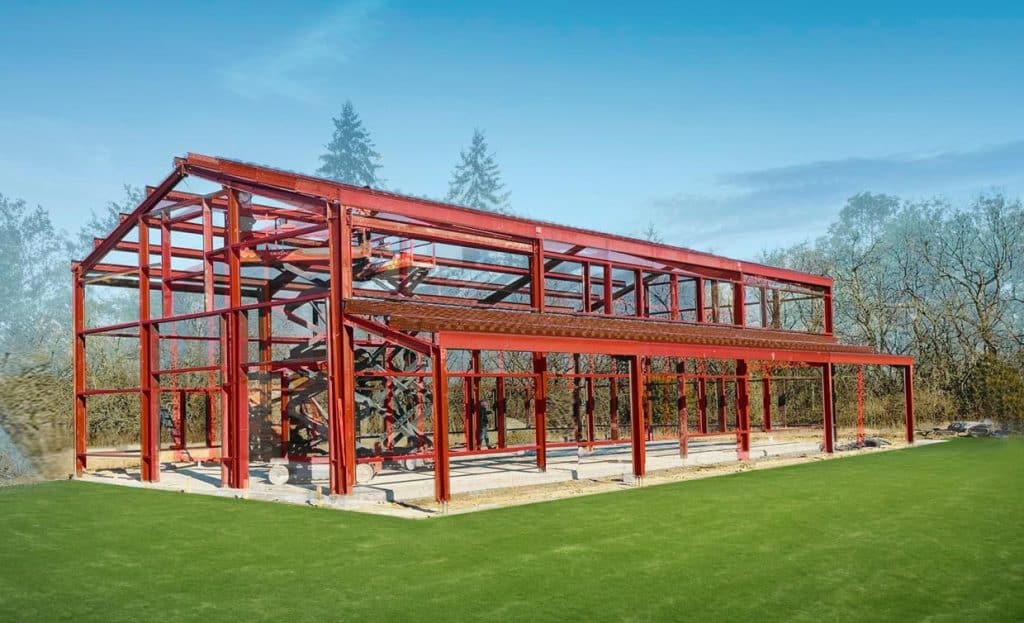
A steel kit is a pre-engineered metal building — a frame of columns and rafters (cold-formed steel or heavier “red iron”) plus metal roof and wall panels — shipped to your site with everything labeled and ready to assemble. The frame does the structural work, which is why steel buildings can span so wide without interior columns. Insulation and interior finishes are added after the shell is up.
Steel is the most popular barndominium shell for a reason: it’s the lowest-cost way to enclose a large footprint, it goes up fast, and the material itself is nearly indestructible.
What is a SIP barndominium kit?

A SIP kit is built from structural insulated panels — a thick foam core sandwiched between two structural facings (usually OSB). Each panel is both the structure and the insulation in a single piece, prefabricated at a factory and shipped ready to set in place. Because the wall and roof go up already insulated and air-sealed, a SIP shell dries in remarkably fast and delivers a high-performance envelope from day one.
On our own SIP panels we see R-24 walls (6½”) and R-40 roofs (10½”) as standard — insulation values a steel or stick-built shell has to work hard to match.
Where steel kits shine
Steel is the workhorse of the barndominium world, and its strengths are hard to beat:
- Lowest upfront cost. A steel kit is the most affordable way to enclose a large building — the reason so many people can build a barndominium at all.
- Massive clear spans. No interior load-bearing walls means you can lay out the whole footprint any way you like, add a big shop or garage under the same roof, and reconfigure later without touching the structure.
- Fire, pest, and rot resistance. Steel is non-combustible and gives termites, carpenter ants, and wood rot nothing to feed on — a genuine long-term advantage.
- Engineered strength. Kits are engineered to your site’s specific wind and (where needed) seismic loads, so a steel barndo stands up well to severe weather.
- Durability and low maintenance. A quality steel building lasts for decades with little upkeep, and steel is recyclable at the end of its life.
- DIY-friendly. Pre-engineered, pre-cut, and bolt-together — a handy owner or a small crew can erect the shell.
What to plan for: steel conducts heat, so a steel shell needs good insulation — most barndominium owners use closed-cell spray foam — plus proper vapor control to prevent condensation. This is completely standard, and done right a steel barndominium is warm, dry, and efficient. Budget for the insulation as part of your finish, and buy a properly engineered, stamped kit rather than a bare-bones commodity package, so it passes inspection the first time.
Where SIP kits shine
SIPs are the performance choice, and their strengths compound over the life of the home:
- Outstanding energy efficiency. . The insulation is built into every panel, and the seams are sealed — which matters, because air leakage is where most houses lose their comfort. In Oak Ridge National Laboratory blower-door testing, a SIP room measured 15 times more airtight than an identical stick-framed room, and the Department of Energy credits SIP construction with roughly 12–14% energy savings over conventional framing. Panel manufacturers often advertise much larger numbers; the truth is that your actual savings depend on your climate, your HVAC, and how carefully the shell is detailed. Either way, it’s a lower bill every month for as long as you own it.
- Very fast dry-in. Because each panel is structure and insulation in one, the shell closes in quickly — we’ve seen an 8,000 sq ft SIP barndominium dried in within about two weeks.
- Airtight and quiet. The tight-sealed panels mean fewer drafts, steadier temperatures room to room, and noticeably less outside noise — a comfortable, calm home.
- Strong and disaster-resistant. SIPs are load-bearing and rigid, giving good resistance to high winds and everyday stress.
- Efficient to heat and cool. A tighter, better-insulated envelope often lets you install a smaller HVAC system, which trims both upfront and running costs.
What to plan for: SIP kits cost a bit more upfront than a bare steel shell, and they reward planning — electrical runs and door/window openings are best mapped out before the panels are made, and the seams need proper sealing and moisture detailing (standard for an experienced installer). In return you get an envelope that pays you back in comfort and lower bills for decades.
What each kit costs
Both fit inside the same overall shell budget. Per our barndominium cost guide, a barndominium shell runs roughly $20–$50 per square foot depending on system and finish level. In practice:
- A steel kit is the lowest entry point — for a 40×60 (2,400 sq ft), kit materials commonly land around $48,000–$84,000, with insulation added separately.
- A SIP kit runs a bit higher upfront because the insulation is baked in — a 40×60 SIP shell is often around $59,000 — but you save on separate insulation and on energy bills for the life of the home.
The honest way to compare them isn’t sticker price alone — it’s total cost of ownership. Steel wins the day you write the check; SIPs often close the gap (or come out ahead) once you factor in insulation and years of lower utility bills. Which matters more depends on how long you’ll own the home and how extreme your climate is. Either way, the shell is only part of the picture — see the cost guide for how finishing, land, and site work add up.
Energy and comfort
This is where the two systems differ most, and it’s worth understanding rather than fearing.
A SIP shell arrives as a continuous, insulated, air-sealed envelope — that’s its whole design, and it’s why SIP homes are so efficient and quiet.
A steel shell is a superb structure but a conductor, so its comfort comes from the insulation you add. The standard, proven solution is closed-cell spray foam against the panels, which insulates and air-seals and controls condensation in one step. A well-insulated steel barndominium is every bit as comfortable as any other home — the performance just comes from the insulation package rather than the shell itself.
Bottom line: SIPs give you the high-performance envelope out of the box; steel lets you dial in the same comfort with the right insulation. Neither is “cold” or “hot” — it’s about where the insulation lives.
Which should you choose?
Match the kit to your priorities:
Choose a steel kit if you want to:
- Keep upfront cost as low as possible
- Build a shop-house, RV bay, or big garage with wide-open spans
- Maximize fire, pest, and rot resistance
- Build in a high-wind region
- Do more of the shell work yourself
Choose a SIP kit if you want to:
- Minimize energy bills for the life of the home
- Build in a climate with hot summers, cold winters, or both
- Get the fastest possible dry-in
- Enjoy a quiet, draft-free, consistently comfortable home
- Finish it as a full-time, forever residence
If you’re torn, think about how long you’ll own it and how extreme your climate is. The longer you’ll live there and the harsher the weather, the more a SIP’s efficiency pays off. If you’re budget-first, building a shop-heavy layout, or value the raw toughness of metal, steel is a fantastic choice.
Can you combine steel and SIPs?
Yes — and plenty of people do. A common high-performance approach is a steel frame with SIP walls and roof: you get steel’s clear spans and structural strength plus the SIP envelope’s insulation and airtightness. It costs more than either alone, but for a large, energy-conscious build in a tough climate it can be the best of both. If that appeals to you, tell us and we’ll help you spec it.
SIP vs. steel barndominium FAQ
Is a SIP or steel barndominium cheaper? A steel kit is cheaper upfront — it’s the lowest-cost way to enclose a building. A SIP kit costs a bit more initially but includes the insulation and lowers energy bills, so over time the gap narrows or reverses. Compare total cost of ownership, not just sticker price.
Which is more energy efficient, SIP or steel? SIPs, out of the box — the insulation is built into every panel (R-24 walls and R-40 roofs are typical) and the envelope is airtight. A steel building reaches similar comfort once it’s well insulated, usually with closed-cell spray foam.
Do steel barndominiums have condensation problems? They can if they’re poorly insulated — but it’s easily prevented. Closed-cell spray foam insulates and air-seals the steel shell and controls condensation in one step. Done correctly, a steel barndominium stays warm and dry.
Which lasts longer, SIP or steel? Both last for decades when built well. Steel is non-combustible and immune to termites and rot; SIPs are durable and rigid but rely on standard moisture detailing to protect the OSB facings. Build either one properly and it will outlive its mortgage.
Which builds faster? SIPs generally dry in fastest because structure and insulation go up together. Steel frames go up very quickly too, but insulating the shell is a separate step afterward.
Can I build a SIP or steel barndominium myself? Steel kits are especially DIY-friendly — pre-engineered and bolt-together. SIP shells go up fast but reward experienced installers for the sealing and detailing. Either way, most owners hire out at least part of the build.
Ready to get your barndominium kit?
We supply both SIP and steel kits nationwide, so whichever fits your build, we can help.
Go with SIPs — learn more about our high-efficiency panel kits. Explore SIP panels →
Go with steel — get a quote on a pre-engineered steel kit. Get a steel building quote →
Not sure yet? Start with a floor plan and your size, and we’ll help you match it to the right kit.
This article is general construction information, not engineering advice. The right shell, insulation, and moisture detailing depend on your climate, local code, and site — confirm specifics with your builder, kit supplier, or a licensed engineer before you build.
We Offer 3 Paths To Get Started
Choose Your Floor plan
Choose from over 1,200 ready-to-build stock plans, available for instant download. Most stock plans can be modified to fit your specific lot starting at $400.
Best for: Residential Homes – Ready To Build
CREATE Your CUSTOM DESIGN
Have your plan drawn to fit your lot and your exact layout — no compromises. $2 per square foot for heated/living areas and $0.50 for unheated spaces.
Best for: Residential Homes – Complete Design Control
Start With A Kit
Steel kits are best for DIY customers, commercial buildings, workshops, or those looking for max savings. They are delivered to you, and you or your contractors erect the kit.
Best for: DIY Customers, Shop Houses & Garages