
We earn a commission when readers buy from our links. It never costs you extra and it never decides what we recommend.
If you are building a barndominium, you can look forward to living in a spacious, light-filled, beautiful home that you can easily customize to fit your lifestyle.
One of the key considerations you will need to tackle when you are planning your barndo construction project is the size for your future home.
This post introduces you to the most common barndominium sizes, and goes over important factors for choosing the size that will be ideal for your family.
What are the Most Common Sizes for Barndominiums?

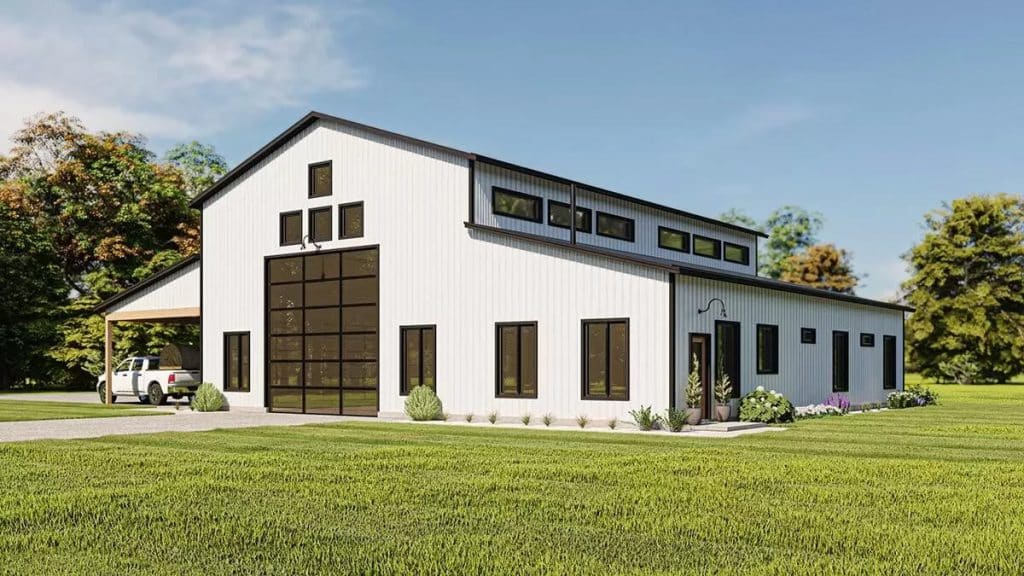


Below are some of the most common sizes for residential barndominiums.
Along with the length and width, we have included the square feet, as that makes it easier to visualize the smallest and largest dimensions.
- 30 x 40 – 1200 square feet
- 30 x 50 – 1500 square feet
- 60 x 60 – 3600 square feet
- 50 x 75 – 3750 square feet
- 40 x 60 – 2400 square feet
- 50 x 100 – 5000 square feet
Click on any of the links above to see examples in each of these barndominium size categories.
Sometimes, being able to look at sample floor plans and images is what you need to really be able to picture how much space a particular square footage amounts to in practical terms, and what you can do with it.
Barndominium homes are usually large enough to accommodate 2 or more bedrooms, multiple bathrooms, and a large kitchen and living room. Many also feature home offices or flex spaces. Luxury features such as walk-in closets are common too.
How Do You Choose the Right Dimensions For Your Building?
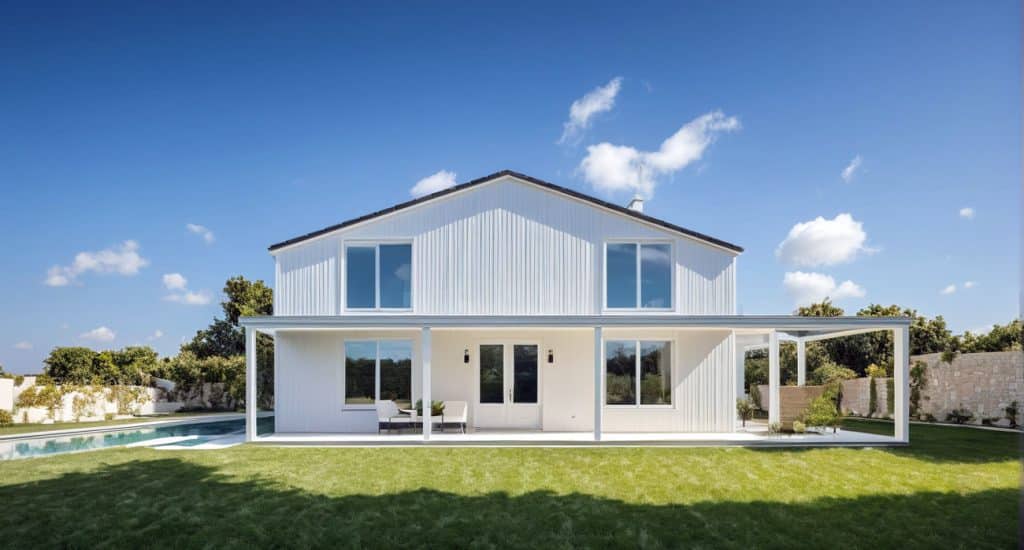
You may be looking at the numbers above with no idea how you can pick the right one for your project. There are a number of different factors you can assess to help you establish which of the common barndominium sizes is suitable.
1. Building Codes
The very first thing you should look at is the building codes for the site where you want to put the bardo. These codes may specify a minimum and/or maximum square footage requirement. If they do, you must choose dimensions that fit within that requirement for your barndo to be legal.
If you have any questions during this phase of your research, you can contact your local building department. They should be able to schedule a meeting with you where you can get the detailed answers you need while discussing your proposed project in-depth.
2. Family Size
The next consideration when you are trying to establish the right square footage for your barndo is the size of your family. Think about the size of your family now, as well as whether that size is likely to expand in the future. Make sure you will have enough room for everyone to live comfortably with sufficient privacy.
Also consider the amount of possessions you have and are likely to have. Your home needs enough space to store them now and in the future. And you do not want them all to be crammed together, either. You will want some space that is simply there to give a sense of openness throughout your home as well.
If you have a hard time visualizing space and dimensions, try taking some actual measurements of stuff you own to help you out. You could also create some scale diagrams as the most accurate way to gauge how much space you need in your future barndo home.
3. Lifestyle Requirements
Closely tied to the considerations above about family size and possessions are lifestyle needs. Here are some examples of questions to ask yourself:
- Do you need a home that can accommodate more than one generation? How intermixed or separate do you prefer your lives to be? Does everyone prefer to be sharing the same main living spaces? Or does each generation need its own separate main living areas?
- How many vehicles do you need to store? Do you have any large equipment to store?
- What types of activities do you plan to use your home for? Will you just be living there, or will you also be working there? If you need a workshop built into your barndo, consider a shop house (“shouse”) plan that incorporates a large, climate-controlled garage.
- Are there any special features you want in your barndo, such as a game room, flex room, etc.?
- Which rooms are family members most likely to spend the largest amount of time in? These may be the ones you want to dedicate more space and special features to.
4. Layout Preferences
While you are answering the questions above, that is also a good time to start thinking about the overall layout you want for your barndo. This, too, will affect its dimensions. Here are some questions you can ask yourself about your layout preferences:
- Do you want to have a single story barndo, or one with multiple stories?
- Do you want the home to have a basement?
- How unified do you want the interior of the barndo to be? Do you want mostly an open flow of space, or do you want an interior that has more divisions and defined spaces? Or do you prefer a balance of both? In general, barndo layouts tend to be on the open side, but there is still a spectrum of openness.
- What kind of roofline do you want? Do you want it to be flat or angled? Do you want to add a special feature such as a cupola?
- What placement of windows and doors do you want?
- Do you want porches and/or decks on your barndo? What layout do you want them to have, and what dimensions?
- Where do you want the garage/workshop with respect to the main living areas and the bedrooms?
- Do you want the house to be more or less rectangular, or do you prefer it to have multiple wings?
- Where do you want the driveway to be situated?
- What are the overall dimensions of your plot, and what orientation do you want the home to be in?
- What are your plans for your surrounding landscaping, and how do the dimensions and layout of your house fit into them?
As you can see, there is a lot to think about here. Only after you have really considered all of these questions can you settle on the right layout and size for your barndo.
5. Sustainability
We live in a time when global warming is leading to measureable climate change effects. You may have even experienced some of the extreme temperatures or weather events associated with climate change yourself.
As a result, a lot of people who are building or buying homes are looking to minimize their carbon footprints.
You may want to take that into account when choosing a barndo size. If it is important to you to keep your carbon footprint small, then a barndo with a smaller square footage may make more sense for you, so long as it provides enough space to accommodate the rest of your needs.
6. Cost & Budget Considerations
Finally, let’s break down a few important cost considerations when choosing a size for your barndo.
Construction Costs
The size you choose for your barndominium will impact how much it costs for you to build.
- It costs more to build a larger barndo than a smaller one. You need to pay for more materials and labor.
- There is, however, a cost-efficiency benefit when you build a larger barndo, and that is that the cost per square foot usually is lower. So, even though your overall costs will be higher, each square foot is more economical to build.
You will need to do the math with your budget to determine how much square footage is affordable for you.
Energy and Maintenance Costs
Along with construction costs, the size of your barndominium will have an impact on your long-term costs with respect to energy use and maintenance.
- The larger your square footage, the more energy it will require for you to heat or cool your barndo to maintain comfortable temperatures throughout the year. This applies both to whole-home HVAC, as well as radiant flooring if you choose to install that. Some people choose to build smaller barndos to keep these long-term energy costs more affordable.
- Another reason some people choose a smaller barndo is because they do not want to spend as much time and money maintaining their home as someone with a larger house might. Simply put, there is less square footage of material, so, less surface area to maintain.
Note that regardless of the size of your barndo, one thing you can do to help keep your energy costs reasonable is to install high quality insulation. Both the type and thickness of your insulation will have an effect on how easy it is to keep the interior of your home comfortable as temperatures outdoors rise and fall.
7. Aesthetics and feelings
We have gone over practical considerations when determining the right barndominium size for your needs. A lesser consideration, but still one worth mentioning, is aesthetics.
Simply put, some people just prefer the look and feel of a larger home or a smaller one. Ask yourself:
- When you see a large house versus a small one, which one looks more appealing to you?
- When you are inside a small home, does it feel cramped? Or does it feel cozy?
- If you are inside a large home, does it feel spacious and accommodating? Or do you feel lost and overwhelmed by all that space and the many different rooms?
There is no right or wrong answer here; it is all down to your personal preference. We advise that you focus on what youenjoy, rather than making your decision based on current trends. Over time, trends fade. But if you go with your own long-term preferences for your house size, you will probably stay happy with your choice over the many years to come.
We have gone over the most important factors to think about when you are trying to determine the right size for your barndominium.
We Offer 3 Paths To Get Started
Choose Your Floor plan
Choose from over 1,200 ready-to-build stock plans, available for instant download. Most stock plans can be modified to fit your specific lot starting at $400.
Best for: Residential Homes – Ready To Build
CREATE Your CUSTOM DESIGN
Have your plan drawn to fit your lot and your exact layout — no compromises. $2 per square foot for heated/living areas and $0.50 for unheated spaces.
Best for: Residential Homes – Complete Design Control
Start With A Kit
Steel kits are best for DIY customers, commercial buildings, workshops, or those looking for max savings. They are delivered to you, and you or your contractors erect the kit.
Best for: DIY Customers, Shop Houses & Garages