
Missouri may be the easiest state in the country to build a barndominium in — and that’s not a figure of speech.
Missouri has no statewide residential building code. In much of rural Missouri, you don’t need a building permit at all. Combine that with land that’s roughly 97% rural, more than 95,000 farms, and a deep bench of post-frame builders who’ve been putting up agricultural buildings for generations, and you have a genuinely permissive place to build.
That freedom is real, and it comes with trade-offs that nobody talks about — around financing, insurance and resale. This guide covers both halves honestly, because the second half is what catches people out.
Missouri has no statewide building code

Most states set a floor. Missouri doesn’t.
There is no statewide building code for private residential construction in Missouri. Every city and county decides independently whether to adopt codes, and which ones. The Missouri Department of Public Safety has some oversight responsibilities but does not act as a statewide code authority the way equivalent agencies do elsewhere.
What that looks like in practice across Missouri’s 114 counties:
- Kansas City, St. Louis, Springfield and Columbia enforce versions of the International Residential Code with local amendments
- St. Louis County follows the 2015 IBC and 2015 IRC and requires permits for most construction, including in unincorporated areas
- Many rural counties have no general building code at all — and no permit requirement for residential construction
Attempts to create a statewide baseline have been introduced repeatedly, most recently Senate Bill 743 and House Bill 2870. As of 2026 none have passed.
The 2001 rule that explains the whole map
Here’s the mechanism, and it’s the thing to understand before you buy land.
Under Missouri Revised Statutes §64.170, any county that had not already adopted a building code before August 28, 2001 cannot impose one unless voters in the unincorporated area approve it at the ballot box.
Counties near the metro areas adopted codes decades ago and enforce them seriously. Many rural counties never held that vote — so they have no general building code, and legally cannot create one without a referendum.
That single statutory line is why enforcement varies so dramatically from one county line to the next. It isn’t inconsistency or oversight; it’s a deliberate structure, frozen in place since 2001.
So the first question isn’t “what does Missouri require?” — it’s “what does this specific county require?” Call the county building or planning department about the parcel before you do anything else. The answer might be a full permit process, or it might be nothing at all.
What still applies, even where there’s no building code
This is the part people miss. “No building code” does not mean “no rules.”
Septic
The Missouri Department of Health and Senior Services sets statewide minimum standards for onsite wastewater treatment systems. A permit is required before installing a new septic system or making major changes to an existing one — replacing a tank, expanding an absorption field.
In most counties the local health department issues these permits, though some assign the authority to a sewer district or planning department. Local ordinances can impose stricter standards than the state baseline.
Get a soil evaluation before you close on land. This applies everywhere in Missouri regardless of what your county does about building codes.
Floodplain
If your property sits in a special flood hazard area, you need a floodplain development permit before building. The State Emergency Management Agency requires these statewide, regardless of whether your community has adopted a building code.
Given Missouri’s river systems, this catches more rural parcels than people expect. Check the FEMA flood map for the parcel early.
Contractor licensing
Missouri has no statewide general contractor licence. However, Kansas City, St. Louis and many other municipalities require local licensing or registration. Verify local requirements before hiring — and see the vetting advice below, which matters more here than in most states.
Zoning
Separate from building codes, and often present even where codes aren’t. Confirm permitted use, setbacks and any minimum dwelling size with the county.
The honest trade-offs of building without code oversight
Building without permits sounds like pure upside — no fees, no waiting, no inspector telling you what to do. Having watched a lot of projects, here’s the other side, and it’s worth reading before you decide.
There’s no second set of eyes. Without inspections, the quality of your build depends entirely on your builder. A good Missouri post-frame builder will construct to standard whether or not anyone checks. A bad one has nothing stopping them. The absence of code enforcement doesn’t lower the standard your building needs to meet — it just removes the mechanism that catches failures.
Lenders may be reluctant to finance construction without permit documentation. This surprises people mid-project. A construction loan officer looking at a build with no permits, no inspections and no engineered plans has very little to underwrite against.
Insurers may require additional verification of construction quality, and may price accordingly.
Buyers may negotiate down or walk away. This is the big one, and it lands years later. When you sell, a buyer’s agent or inspector discovering that a major structure was built with no code oversight is a genuine problem. Some buyers will discount heavily. Some will simply move on.
What I’d actually recommend
Build to IRC standard and document it, even where nobody requires you to.
That means: engineered plans, a builder who works to code as a matter of course, photographs through construction — particularly of everything that gets covered up — and inspections you commission voluntarily if none are required.
It costs relatively little during construction. It protects your financing, your insurance, and your resale value. And it means the freedom Missouri gives you is a genuine advantage rather than a liability you discover in ten years.
Tornado exposure — build the shelter
Missouri sits in one of the most tornado-prone regions of the United States. The 2011 Joplin tornado remains among the deadliest in American history.
A barndominium is a large clear-span structure — the design that makes the open interior possible is also the design with the fewest interior walls to shelter behind. And in a county with no building code, nothing requires you to address it.
Build the safe room. It’s typically a small interior space — a bathroom, closet or utility room — with reinforced walls and ceiling and a properly rated door. Done during construction it’s a modest line item. Retrofitted afterwards it’s a major project.
Our safe room floor plans show how a shelter integrates into a barndominium layout without wasting usable space. Of every state we cover, Missouri is the one where I’d treat this as non-negotiable.
Regional differences across Missouri
Missouri spans real variation, and a building specified for one part of the state can be wrong for another.
Northern plains — flatter, more open, colder winters and higher snow loads than the south. Agricultural land and an established post-frame building base.
Central Missouri and the Ozark plateau — rolling and often rocky terrain. Site preparation and septic can both be more complicated here, and a percolation test matters more than usual. Ozark soil and bedrock are genuinely different from the plains.
Southeast Missouri and the Bootheel — the warmest and flattest part of the state, with lower snow loads but more floodplain to navigate given the river systems.
The metro fringes — St. Louis County, Jackson County and the Springfield and Columbia areas. Where codes are enforced, and enforced properly. Expect a full permit process.
Confirm with your county: design ground snow load, frost depth, and design wind speed for your specific address — and get all three in writing before you accept any kit or truss quote. These vary meaningfully across Missouri, and a supplier who quotes without asking where you’re building hasn’t quoted for your building.
What it costs to build a barndominium in Missouri
Missouri is one of the more affordable states in the country to build in, and the numbers reflect it.
Finished barndominiums in Missouri average around $96 per square foot, with most projects falling between $60 and $160. That’s at the lower end of the national range, and it’s a genuine Missouri advantage rather than a rounding difference — land is cheap, labour is reasonable, and the post-frame supply chain here is mature.
Shell-only steel kits run roughly $20 to $35 per square foot at current 2026 wholesale pricing. Popular sizes:
| Size | Square feet |
|---|---|
| 30×50 | 1,500 |
| 40×60 | 2,400 |
| 50×60 | 3,000 |
| 60×80 | 4,800 |
A kit is the shell — frame, roof, siding, trim, fasteners and engineering. Everything inside is separate, and the interior finish is where budgets actually diverge.
What moves your number in Missouri
- Where you build. The metro fringes — St. Louis, Kansas City, Springfield, Columbia — carry higher labour costs and a full permit process. Rural counties are cheaper on both counts.
- Terrain. Ozark sites can need significantly more site preparation than flat northern farmland, and rocky ground affects both excavation and septic.
- Whether you’re permitted. A full permit process adds fees and time. Not having one doesn’t reduce what your building should cost — see the section above on building to standard regardless.
- Interior finish level, which moves the total more than the building method does.
Our Top-Rated Barndominium Builders In Missouri
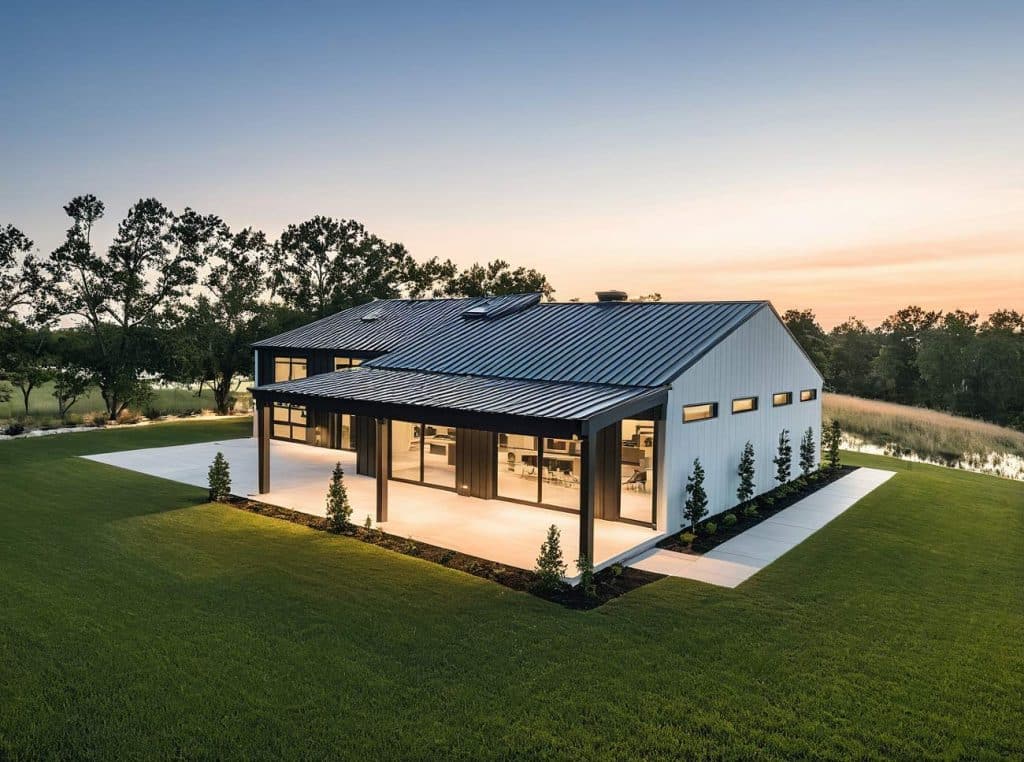
Missouri has a strong local builder base, much of it grown out of agricultural post-frame work. Before you call anyone, know which model you want — some of these build and finish the whole home, others deliver a weather-tight shell for you to finish with local trades.
Are You A Barndominium Builder in Missouri? Feature Your Best Build Here
We work with a small number of barndominium builders in each region — not a directory, and not one company per state. If you build barndominiums in Missouri and want your projects in front of homeowners who are actively planning one, we would like to see your work.
Send us two to three completed builds, the regions you serve, and your license details. We review every submission and reply either way.
DreamStart Buildings
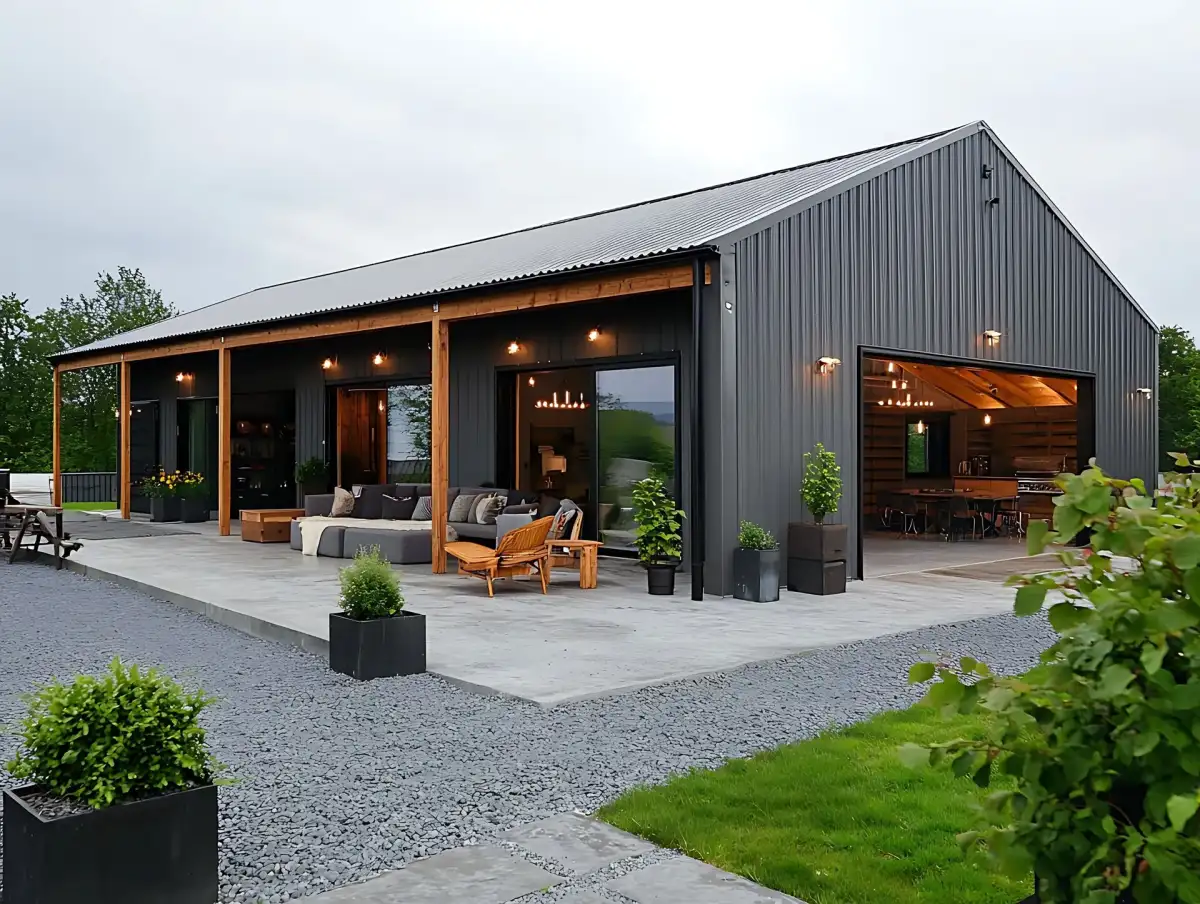
1932 Frederick Ave, St. Joseph, MO 64501 · dreamstartbuilding.com
Founded in 2025 by John Piazza Norton, who left the pole barn industry to focus on energy-efficient residential construction.
DreamStart builds “homestead shells” — a complete weather-tight structure with SIP walls, SIP roof and metal exterior cladding, ready for interior finishing. Rather than stick framing, they use Solid-Core structural insulated panel construction, which gives better energy performance, faster erection and a stiffer structure.
Their panels are factory-cut at the EPS facility in Graettinger, Iowa — precision-cut to your build spec rather than improvised on site. Their network handles erection; the factory handles the panels.
Shell only — weather-tight, ready for your interior trades. SIP construction, which suits Missouri’s hot summers and cold winters well.
Disclosure: we have a partner relationship with DreamStart. See our affiliate disclosure.
Are you a Missouri builder? We’d particularly like better coverage in the Ozarks and southeast Missouri. Get in touch with your service area and completed projects.
Missouri Barndominium Plans Best Sellers

Missouri barndominium FAQ

Do I need a building permit to build a barndominium in Missouri? It depends entirely on where you build. Missouri has no statewide residential building code. Kansas City, St. Louis, Springfield, Columbia and St. Louis County enforce versions of the International Residential Code and require permits. Many rural Missouri counties have no building code and no permit requirement for residential construction. Call the county building or planning department about your specific parcel — it’s the first call to make.
Why do the rules vary so much between counties? Because of Missouri Revised Statutes §64.170. Any county that hadn’t adopted a building code before August 28, 2001 cannot impose one unless voters in the unincorporated area approve it at the ballot box. Metro-area counties adopted codes decades ago; many rural counties never held that vote and legally can’t create one without a referendum.
If my county has no building code, do I need any permits at all? Usually yes, just not building permits. A septic permit is required statewide for any new onsite wastewater system, under standards set by the Missouri Department of Health and Senior Services and typically issued by your county health department. If your land is in a special flood hazard area, SEMA requires a floodplain development permit regardless of local code adoption. Zoning rules may also apply separately.
Should I build to code even if my county doesn’t require it? Yes — and this is the most important advice on this page. Without permits and inspections, lenders may be reluctant to finance, insurers may require extra verification, and buyers can negotiate down or walk away when they discover major structures were built without code oversight. Build to IRC standard, use engineered plans, photograph everything before it’s covered, and commission inspections voluntarily if none are required. It costs little now and protects financing, insurance and resale.
Do I need a licensed contractor in Missouri? There’s no statewide general contractor licence. Kansas City, St. Louis and many other municipalities require local licensing or registration, so check locally. In counties with no licensing and no inspections, your builder’s reputation is doing all the work — ask for references from completed projects, visit finished builds, and confirm insurance and bonding yourself.
How much does a barndominium cost in Missouri? Around $96 per square foot on average for a finished build, with most falling between $60 and $160. Shell-only steel kits run roughly $20–$35 per square foot. Missouri sits at the affordable end of the national range.
Do barndominiums hold their value in Missouri? They can, and several things drive it. Location matters — proximity to thriving towns and cities supports demand. Construction quality matters more here than in most states, precisely because code enforcement is patchy; a well-built, documented barndominium stands out. Design appeal helps too, since custom layouts and efficient floor plans broaden the buyer pool.
Be realistic that barndominiums attract a somewhat narrower market than conventional homes, so finding the right buyer matters — an agent familiar with the type is worth seeking out. And the single biggest thing you control is documentation: permits, plans and inspection records make a resale straightforward that would otherwise raise questions.
Do I need a storm shelter? Nothing requires one in most of Missouri — which is precisely why you should build one. Missouri is in one of the most tornado-prone regions in the country, and a clear-span building has few interior walls to shelter behind. A reinforced interior room built during construction is a modest cost; a retrofit is not.
Ready to start your Missouri build?
Three ways to begin, depending on how much of the work you want to take on:
Start with a floor plan — over 1,200 stock plans, any of which can be modified, or design something custom. Browse barndominium plans →
Start with a prefab shell — SIP shell kits, which suit Missouri’s climate range well. See prefab shells →
Start with a steel kit — best for DIY builders, workshops, and maximum savings. We offer wholesale pricing with no-obligation quotes. Get a steel building quote →
Whichever route you take in Missouri: call the county first to find out what’s actually required, get a soil evaluation before you buy land, check the flood map, and build to standard whether or not anyone is checking.
This page is for general informational purposes and isn't a substitute for confirming requirements directly with your county building, planning or health department, a qualified Missouri builder, or a mortgage professional. Local ordinances change — verify current requirements for your specific parcel before you build.
If you would like to add your business to our state guides or run a feature profile on our site please contact us below. Please send your featured build images, project details and company history to us.
If you would like to add your business to our state guides or run a feature profile on our site, contact us below. Please send your featured build images, project details and company history to us.
This page is for general informational purposes and isn't a substitute for confirming requirements directly with your county's building and zoning office, a licensed state contractor, or a mortgage professional.
We Offer 3 Paths To Get Started
Choose Your Floor plan
Choose from over 1,200 ready-to-build stock plans, available for instant download. Most stock plans can be modified to fit your specific lot starting at $400.
Best for: Residential Homes – Ready To Build
CREATE Your CUSTOM DESIGN
Have your plan drawn to fit your lot and your exact layout — no compromises. $2 per square foot for heated/living areas and $0.50 for unheated spaces.
Best for: Residential Homes – Complete Design Control
Start With A Kit
Steel kits are best for DIY customers, commercial buildings, workshops, or those looking for max savings. They are delivered to you, and you or your contractors erect the kit.
Best for: DIY Customers, Shop Houses & Garages