
Utah is one of the fastest-growing states in the country, and that growth is spilling into rural counties faster than almost anywhere else — some of Utah’s most rural counties have outpaced Salt Lake County’s growth rate several times over in recent years. Barndominiums fit naturally into that shift: affordable rural land, wide-open space, and a construction style well suited to Utah’s dramatic range of climate, from the Wasatch Back’s heavy snowfall to the dry heat of St. George.
Here’s what actually applies.
Water Rights: Utah’s Most Distinctive Regulatory Hurdle
If you take away one thing from this page, make it this: in Utah, you generally need a valid water right before you can legally drill a well — this is not a new rule, it’s been part of Utah water law since its inception, and it catches a surprising number of rural land buyers off guard.
Utah operates under the Prior Appropriation Doctrine, administered by the Utah Division of Water Rights. A few key facts:
- Water rights are legally classified as real property — they can be bought, sold, and transferred, but they’re tied to a specific source, a quantified use, and a specific place of use.
- Older water rights are senior to newer ones. If water supply is limited at a given source, junior right holders may have to yield to senior right holders during shortages.
- Before constructing a well, you need an approved water right and a Start Card — essentially the permit to begin construction — issued by the Division of Water Rights.
- Wells must be constructed by a licensed well driller or licensed shallow water well constructor; a shallow well constructor’s license only covers wells up to 30 feet deep.
Practical takeaway: don’t assume rural land automatically comes with the right to drill a well for it. Confirm the parcel already has an established water right, or research what it would take to secure one, before you commit to buying land — this is genuinely one of the most common ways an otherwise-promising Utah barndo project stalls out.
Seismic Risk: The Wasatch Fault
Most of Utah’s population — and a large share of its rural growth corridors — sits in a moderate-to-high seismic zone along the Wasatch Fault. This has real structural implications for any new construction, barndominiums included:
- Foundations, bracing, and structural connections all need to account for earthquake forces, which adds both engineering complexity and cost compared to a seismically quiet state.
- This requirement applies broadly across the Wasatch Front (Salt Lake and Utah counties) and extends into many of the fast-growing rural counties nearby.
- Confirm your builder’s engineering explicitly accounts for Wasatch Fault seismic requirements — a generic barndominium kit designed for a low-seismic state elsewhere won’t automatically meet Utah’s structural standards.
Can You Legally Build a Barndo in Utah?
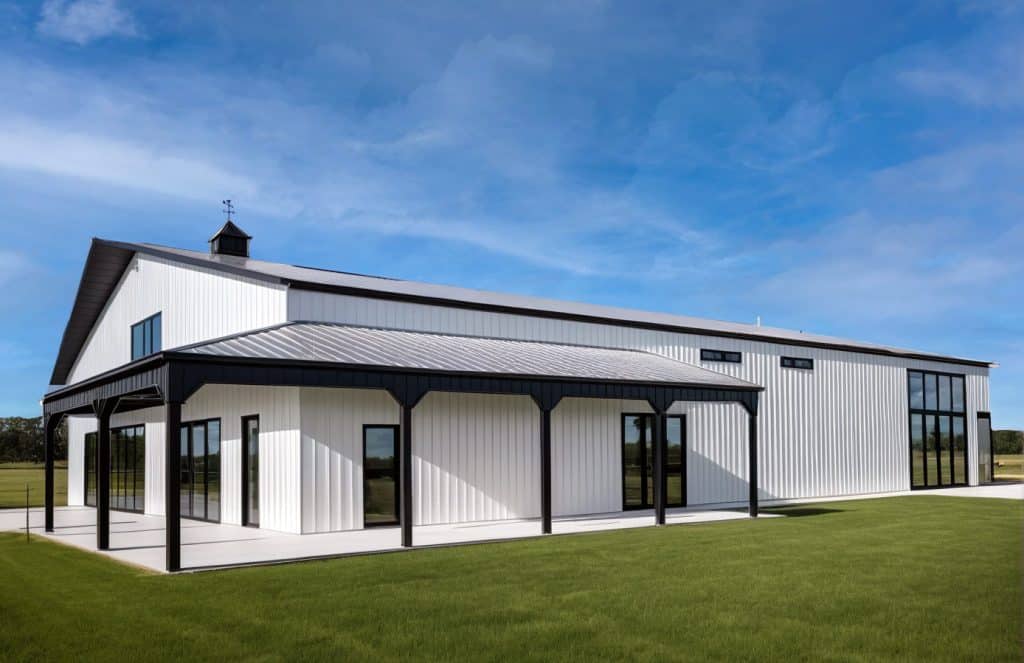
Yes, you can build a barndominium in Utah as long as the home meets the state’s and local jurisdiction’s requirements.
As with most states, it will be easier to build a home in more rural areas. Laws are generally more relaxed in these areas.
The biggest hurdle you’ll face is determining how you’ll get access to water. If you’re building your barndo in an area with nearby access to city water, this won’t be a problem.
However, much of the state is under severe drought and there are often restrictions on water-use permits. It may be challenging or even impossible to drill a well.
It’s important to check local laws and regulations in the area you want to build just to see what you’re up against.
You’ll likely need a permit and a general contractor to carry out the work. Zoning laws will also come into play. Some areas have minimum housing requirements that essentially make mobile homes and tiny homes illegal. Barndos generally don’t fit into either of these categories, so you shouldn’t have an issue here. But if you were planning on building a tiny barndo, you may need to rethink your plans.
Apart from these minor issues, the process of building a barndominium in Utah is the same as building any other home.
Utah Barndominium Plans Best Sellers

Recommended Barndominium Builders in Utah
Are You A Barndominium Builder in Utah? Feature Your Best Build Here
We work with a small number of barndominium builders in each region — not a directory, and not one company per state. If you build barndominiums in Utah and want your projects in front of homeowners who are actively planning one, we would like to see your work.
Send us two to three completed builds, the regions you serve, and your license details. We review every submission and reply either way.
Utah Building Codes and Permits
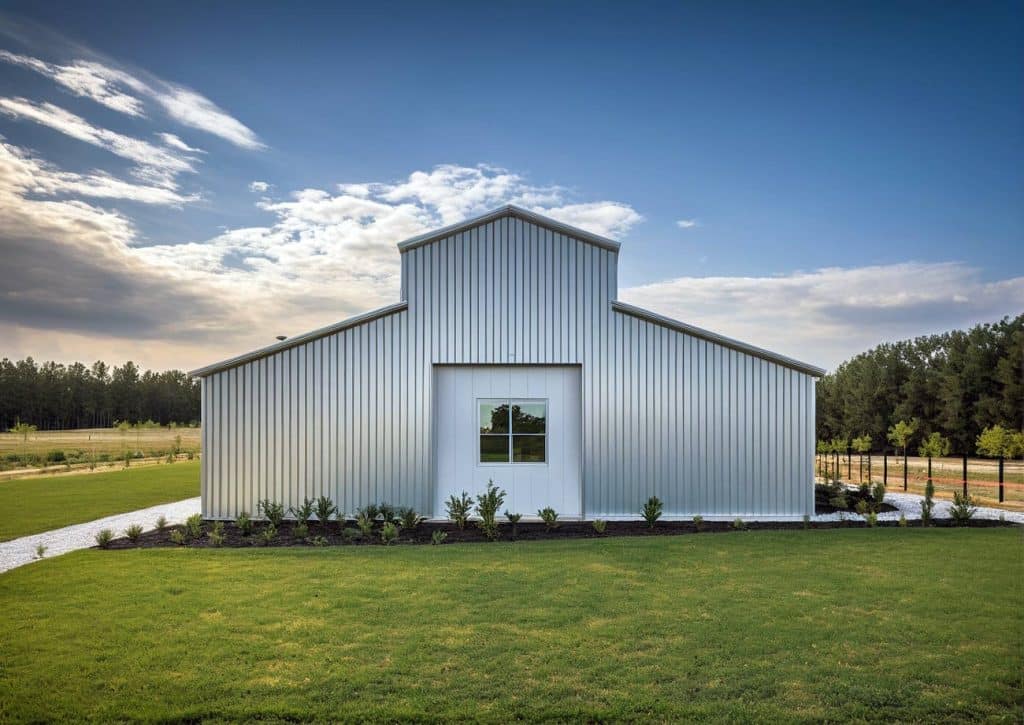
Utah has adopted the International Residential Code (IRC) and International Building Code (IBC), meaning your barndominium must meet the same structural, electrical, and plumbing standards as any conventional home — because it creates a new dwelling unit, even though it also functions as a barn or shop.
- All Utah counties require permits for new homes, and most require permits for large accessory structures too — Cache County, for example, explicitly requires a permit for new homes, additions, sheds over 200 sq ft, shops, and garages. Assume your barndominium needs a permit regardless of how rural your land is.
- Zoning is generally favorable. Barndominiums typically qualify as single-family dwellings, which are allowed by right in most agricultural and rural residential zones across the state. Rural building is often easier here than in cities specifically because there are fewer HOA rules and restrictive covenants to navigate.
- Utah law requires local authorities to complete plan review for one- or two-family dwellings within a set timeframe — typically just a few weeks — though high-growth counties can still see real delays in practice.
- A conditional use permit may be required if your barndominium includes a non-residential component in an unincorporated area — for example, a commercial workshop or event space — but a standard home-and-shop combination for personal use usually just needs a straightforward building permit.
- Some counties impose minimum living area requirements (often around 1,000 sq ft) or exterior material standards — a full-size barndominium should meet these without issue, but a very small or tiny-home-style build is worth double-checking against local rules so it isn’t classified as an RV or cabin instead.
Regional Cost and Climate Variation
Utah’s geography creates genuinely different cost and design considerations depending on where you build:
- Wasatch Front (Salt Lake and Utah counties): the busiest market in the state, with land prices at or near an all-time high. Labor availability is good, but land cost drives most of the price variation here.
- Park City and Summit County: expect a 30–50% cost premium over other parts of the state, driven by strict HOA design rules and mountain-grade structural engineering for heavy snow loads.
- Southern Utah (St. George area): generally more affordable labor, but the desert location means material shipping costs can add up, particularly for larger orders.
- Rural areas like Heber Valley or Morgan County: land itself may be more affordable, but budget for the real cost of bringing utilities — power, water infrastructure, and sometimes road access — to a site that isn’t already developed.
What are the Costs Involved with Building a New Barndominium in Utah?
Barndominium costs vary greatly depending on size, materials chosen and the builder that you choose. Builders will provide you with a general estimate to better understand the actual, current costs of a barndo.
General costs are:
- $80 – $185 per square foot, depending on finishes, size and style
- $2,800 – $6,000 for an acre of land, but this can change considerably by location
You’ll need to consider the cost of land prep, too. Costs to consider are:
- Land clearing and grading
- Foundation work
- Cost to run utilities
- Well, septic or connecting to city lines
What It Actually Costs
Utah cost estimates vary considerably by source and region, similar to other states with wide urban-to-rural cost spreads:
| Build type | Typical range |
|---|---|
| Shell/kit only | Roughly $20–$35/sq ft for materials |
| Basic finished, lower end | Roughly $70–$120/sq ft |
| Standard finished, mid-range | Roughly $100–$185/sq ft |
| Custom, high-end finishes | $185–$300+/sq ft |
For a 2,000 sq ft build, this puts most buyers somewhere between $200,000 and $450,000, with Park City-area and highly customized builds running well above that range. As with other states, get quotes broken out by shell, foundation, site work, and interior finish so you can compare builders on equal terms — and confirm whether seismic engineering and any water right/well costs are included or billed separately.
Financing
As in most states, barndominiums can be harder to finance than conventional homes since many lenders lack an established appraisal framework for them.
- Construction loans designed specifically to fund ground-up building are the most common financing path, typically converting to a standard mortgage once construction completes.
- Home equity financing is worth considering if you already own property outright and are building a second structure or replacing an existing home.
- Confirm your appraiser has barndo-specific experience — a generic appraisal can undervalue non-traditional construction, particularly in rural Utah markets with fewer comparable sales.
Working With a Local Utah Home Builder
Given how much Utah’s water rights, seismic requirements, and regional cost variation shift across the state, a builder with genuine local experience is worth significantly more than a generalist. When vetting a Utah builder, ask:
- Whether they understand your specific county’s water rights situation and can help you confirm well eligibility before you finalize plans
- Whether their engineering explicitly accounts for Wasatch Fault seismic requirements, if you’re building anywhere along the Front
- How their pricing and timeline change between, say, the Wasatch Back’s heavy snow country and the dry heat of St. George
- For references or photos from completed projects in your specific region
If you would like to add your business to our state guides or run a feature profile on our site please contact us below. Please send your featured build images, project details and company history to us.
If you would like to add your business to our state guides or run a feature profile on our site, contact us below. Please send your featured build images, project details and company history to us.
This page is for general informational purposes and isn't a substitute for confirming requirements directly with your county's building and zoning office, a licensed state contractor, or a mortgage professional.
We Offer 3 Paths To Get Started
Choose Your Floor plan
Choose from over 1,200 ready-to-build stock plans, available for instant download. Most stock plans can be modified to fit your specific lot starting at $400.
Best for: Residential Homes – Ready To Build
CREATE Your CUSTOM DESIGN
Have your plan drawn to fit your lot and your exact layout — no compromises. $2 per square foot for heated/living areas and $0.50 for unheated spaces.
Best for: Residential Homes – Complete Design Control
Start With A Kit
Steel kits are best for DIY customers, commercial buildings, workshops, or those looking for max savings. They are delivered to you, and you or your contractors erect the kit.
Best for: DIY Customers, Shop Houses & Garages