


The framing stage is one of the most crucial parts of your barndo construction project. It provides the structural support for your entire home and determines how your space will flow. Whether you choose a wood frame design or opt for a durable steel frame system, your framing choices will impact everything from construction time to long-term maintenance costs.
The barndominium framing process typically involves a few basic steps that start with designing the interior layout and building the wall frames. Many homeowners appreciate that barndominiums offer flexibility while maintaining structural integrity. This combination allows for open floor plans and modern amenities within a rustic barn-inspired exterior.
Before we start out guide to framing your barndominium, keep these key points in mind:
- Barndominium framing can use either steel or wood materials, each offering different benefits for durability, cost, and ease of installation.
- The framing process begins with interior layout design and requires careful planning to ensure structural integrity while maintaining desired aesthetic features.
- Properly executed framing provides the foundation for customization options like open floor plans while supporting the unique barn-style architecture.
4 Types of Frames for Barndominiums

Barndominium framing options vary in cost, durability, and construction complexity. The right frame type for your project depends on your budget, climate considerations, and long-term maintenance preferences.
#1 – Post Frame Construction
Post frame construction, also known as pole barn construction, uses large posts buried in the ground or anchored to a concrete foundation. This framing style features widely spaced posts (typically 8-12 feet apart) that support the roof system.
Post frame barndominiums are cost-effective and quick to build. The wider spacing between structural elements creates more open interior spaces and requires fewer materials than traditional framing.
This construction type works well in rural areas and offers excellent wind resistance. The posts can be treated wood that provides natural insulation properties.
One advantage of pole barn structures is their versatility for different soil conditions. They don’t always require a full concrete foundation, which can save significant costs during construction.
Post frame buildings typically have lower labor costs since they can be erected quickly with smaller crews. However, they may have some limitations for multi-story designs.
#2 – Steel Frame Construction
Steel frame barndominiums utilize structural steel components for the primary load-bearing elements. These frames consist of I-beams, C-channels, and other steel components that create the building’s skeleton.
Steel frame options stand out for their strength, durability, and resistance to fire, termites, and rot. Modern steel barndominiums often use pre-engineered metal building (PEMB) kits that arrive ready for assembly.
Steel frames allow for impressive clear-span designs without interior support columns. This creates versatile, open floor plans that can be customized to various needs.
These structures offer excellent durability in extreme weather conditions. Steel barndominiums can be more energy efficient than conventional construction when properly insulated.
The primary drawbacks include higher initial costs and potential challenges with thermal bridging that must be addressed during insulation.
#3 – Wood Frame Construction
Wood frame construction for barndominiums uses traditional stick-framing methods similar to conventional homes. This approach utilizes dimensional lumber (2×4s, 2×6s) to create the structural framework.
Several variations exist, including clear-span, post & beam, and timber frame styles. Each offers different aesthetic and structural benefits while maintaining the warmth and character of wood.
Wood frames are familiar to most builders, making it easier to find qualified construction crews. They also allow for conventional insulation methods and simplified electrical/plumbing installation.
The natural insulating properties of wood help maintain comfortable interior temperatures. Wood-framed structures can be more budget-friendly in areas where lumber is readily available.
This construction type does require more maintenance than steel options and may be vulnerable to insects, moisture damage, and fire if not properly protected.
#4 – Hybrid Frame Construction
Hybrid frame construction combines elements from different framing systems to maximize strengths and minimize weaknesses. Common combinations include post frame with conventional wood framing or steel primary structure with wood secondary elements.
These hybrid approaches often result in the best of both worlds. For example, steel primary frames provide strength and span capabilities, while wood secondary framing simplifies interior finishing and utility installation.
Hybrid designs can be optimized for specific climate challenges. In hurricane or tornado-prone areas, steel main frames with wood infill walls provide excellent resistance to high winds.
According to building professionals, post frame or stick frame may be preferable to pure steel construction in some applications. These hybrid approaches often balance cost, ease of construction, and performance.
Hybrid frames typically require more specialized design expertise to ensure proper integration of different structural systems. However, the results often justify the additional planning.
What are the typical costs associated with framing a barndominium?
Framing typically represents 15-20% of a barndominium’s total construction budget. For a standard 2,000 square foot barndominium, framing costs generally range from $15,000 to $30,000 depending on material choices and labor rates.
Steel framing tends to cost more upfront than wood, with prices between $11-$15 per square foot for steel compared to $7-$12 for wood framing. However, cost savings often appear later through reduced maintenance and better energy efficiency.
Regional pricing variations exist, with rural areas sometimes offering lower labor costs than urban centers. DIY framing can reduce expenses by 30-40%, though this requires substantial skill and appropriate tools.
Design Considerations for Framing
Proper framing design is essential for a sturdy, efficient, and functional barndominium. The structural integrity, space utilization, and overall durability depend heavily on how the framing is approached during the planning and construction stages.
Load-Bearing Structure
The load-bearing structure forms the backbone of any barndominium. Most barndominiums utilize one of three primary framing approaches: pole barn construction, pre-engineered metal buildings, or traditional wood framing.
Pole barn structures use large posts buried in the ground or anchored to concrete piers. This design efficiently transfers weight to the ground and requires fewer interior support walls.
Pre-engineered metal buildings offer exceptional strength-to-weight ratios and typically feature clear-span designs that eliminate the need for interior load-bearing walls. These frames are manufactured off-site to precise specifications.
Traditional wood framing, similar to conventional home construction, uses dimensional lumber arranged in stud walls. This option provides familiar construction methods but may require more interior supports.
The soil conditions, local weather patterns, and building size all influence which framing system will work best. Always consult with a structural engineer to ensure your chosen system meets local building codes.
Open Floor Plan Support
Barndominiums are known for their spacious, open layouts. Creating these open spaces requires careful consideration of how to support the structure without numerous interior walls.
Steel beams and trusses can span longer distances than wood, making them ideal for creating open floor plans. These structural elements transfer loads to exterior walls and eliminate the need for interior load-bearing walls.
For larger open spaces, consider:
- LVL (Laminated Veneer Lumber) beams
- Steel I-beams
- Glulam (glued laminated timber) beams
- Heavy timber trusses
The interior wall style should complement your overall design while providing adequate support. Non-load-bearing walls can be framed with 2×4 lumber, while load-bearing walls typically require 2×6 construction for additional strength.
When designing open spaces, remember that plumbing, electrical, and HVAC systems need pathways through the structure. Plan these routes early to avoid structural modifications later.
Roof and Ceiling Structures
Roof design significantly impacts both the aesthetics and functionality of your barndominium. Most barndominium roof structures use trusses, which efficiently distribute weight to the exterior walls.
Common truss options include:
- Scissor trusses: Create vaulted ceilings
- Standard trusses: Form traditional attic spaces
- Gambrel trusses: Create barn-style roofs with usable upper spaces
- Mono-pitch trusses: Support single-slope roofs
Ceiling height deserves careful consideration. Many barndominiums feature higher ceilings (10-12 feet) than traditional homes, creating an open, spacious feeling. Higher ceilings also improve air circulation and temperature control.
Metal roofing is popular for barndominiums due to its durability and weather resistance. The roof structure must be designed to support this material along with snow loads, wind uplift, and any ceiling fixtures.
Insulation placement within the roof structure significantly impacts energy efficiency. Options include spray foam applied directly to the underside of the roof deck or batt insulation installed between ceiling joists.
Exterior Wall Framing
Exterior walls must balance structural integrity, insulation, and aesthetic appeal. The framing method directly impacts each of these factors.
For metal buildings, exterior walls typically use post frame construction with steel girts running horizontally between vertical posts. This system supports metal siding and creates a cavity for insulation.
Wood-framed exterior walls use traditional stud framing, typically with 2×6 lumber to allow for greater insulation depth. This construction method works well when planning to use conventional siding materials.
Windows and doors require properly framed openings with headers sized according to the span. Larger openings, such as for garage doors, need substantially stronger headers and support posts.
Wall height affects both aesthetics and functionality. Many barndominiums feature walls 10-14 feet tall, creating more spacious interiors. Taller walls may require additional bracing or alternative framing techniques to maintain structural integrity.
Consider how exterior walls will connect to the foundation and roof structure. These connection points must be properly designed to transfer loads and resist uplift forces during high winds.
Material Choices
Selecting the right materials for barndominium framing directly impacts durability, cost, and energy efficiency. Each material option offers unique advantages that align with different building goals and regional considerations.
Choosing Lumber
Traditional wood framing remains popular for many barndominium projects. 2×4 pine lumber is the most common choice due to its availability and cost-effectiveness. For areas requiring more structural strength, 2×6 lumber provides additional stability and better insulation space.
Pressure-treated lumber is essential for ground contact areas to prevent rot and insect damage. This treatment extends the life of wood components significantly.
Engineered wood products like LVL (Laminated Veneer Lumber) beams offer superior strength for long spans and load-bearing walls. They resist warping and splitting better than dimensional lumber.
Wood Framing Benefits:
- More familiar to local contractors
- Easier modifications during construction
- Better for attaching interior finishes
- Typically lower initial cost
Selecting Steel Materials
Metal framing provides exceptional strength for barndominium structures. Pre-engineered metal building kits offer consistent quality and precise specifications.
Steel gauges vary based on structural requirements – common options include:
- 14-gauge: Heavier, used for primary structural components
- 16-gauge: Standard for most wall studs
- 18-gauge: Lighter, for non-load bearing applications
Red iron steel beams provide superior strength for wide spans without interior support posts. This creates open floor plans that many homeowners desire in modern barndominiums.
Galvanized steel provides superior corrosion resistance compared to standard steel. This coating adds decades to the structure’s lifespan, especially in humid climates.
Step-By-Step Framing Process
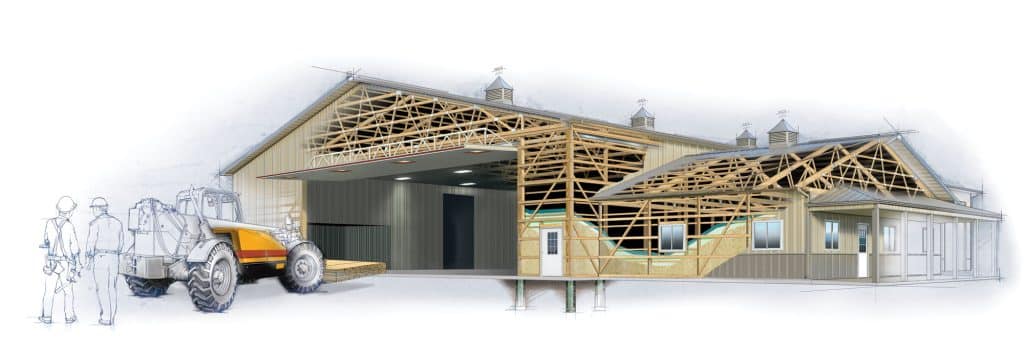
Framing a barndominium requires careful planning and execution. The process combines traditional post construction with modern framing techniques to create a sturdy structure that will last for decades.
Foundation Preparation
Before any framing begins, a proper foundation must be established. Most barndominiums use a concrete slab foundation that’s reinforced with rebar and wire mesh.
First, mark out the exact dimensions using string lines and stakes. This ensures your foundation matches your building plans perfectly.
Next, excavate the area to the proper depth, typically 4-6 inches for a residential barndominium. The soil should be compacted to prevent settling.
Install formwork around the perimeter using 2x4s or metal forms. These will contain the concrete and define the edges of your slab.
Add a vapor barrier over the prepared soil. This prevents moisture from seeping up through the concrete.
Place rebar in a grid pattern for structural support. The rebar should be elevated on “chairs” to ensure it sits in the middle of the concrete pour.
Frame the inside layout for any plumbing or electrical conduits that need to be embedded in the slab.
Erecting the Frame
Once the foundation cures, it’s time to construct the main frame. Barndominiums typically use post-frame construction for the exterior walls.
Begin by installing the main support posts. These are typically set 8-10 feet apart and secured to the foundation using post brackets or by being embedded in concrete pier footings.
Next, attach horizontal girts between the posts. These will support the exterior metal siding and provide attachment points for insulation.
Install the top plate or header across the posts. This creates a solid surface for roof trusses to rest on.
For interior walls, use traditional wood framing techniques with 2×4 or 2×6 studs placed 16-24 inches on center. Begin by building wall sections on the ground.
Raise each framed wall section and secure it to the foundation using concrete anchors. Brace the walls temporarily until they’re all connected.
Add additional framing for any special features like large sliding doors or cathedral ceilings.
Adding the Roof and Floors
The roof structure begins with installing trusses or rafters across the top of the frame. Trusses are typically spaced 24 inches apart.
Secure each truss to the top plate using hurricane ties or framing anchors. This provides resistance against wind uplift.
Install purlins horizontally across the trusses. These will support the metal roofing panels and provide a surface for attaching insulation.
For multi-story barndominiums, floor joists must be installed to create the second level. These are typically 2×10 or 2×12 lumber spaced 16 inches apart.
Add blocking between joists at mid-span to prevent twisting and provide additional strength.
Cover the floor joists with 3/4-inch tongue-and-groove subflooring, glued and screwed down to prevent squeaking.
For ceiling framing, install joists or use the bottom chords of the trusses as attachment points for drywall or other ceiling materials.
Installing Windows and Doors
Once the main structure is framed, windows and doors need proper framing to ensure they’re secure and weathertight.
Create rough openings for all doors and windows according to manufacturer specifications. Always add an extra 1/2 inch in width and height to accommodate shimming.
Install headers above each opening. For small windows, a double 2×4 may suffice. Larger openings require engineered headers like LVL beams.
Add king studs on either side of the opening that run from floor to ceiling. These provide support for the header.
Install jack studs (trimmer studs) inside the king studs to directly support the header.
Frame the sill plate at the bottom of window openings. This creates a flat surface for the window to rest on.
For exterior doors, ensure the threshold area is properly supported and waterproofed. Metal doors common in barndos require particularly sturdy framing.
Pre-hang doors and windows before completing interior wall framing to ensure everything fits properly with the rough openings.
Frequently Asked Questions
How does the framing process for a barndominium differ from traditional home framing?
Barndominium framing typically utilizes post-frame or steel construction rather than traditional stick-frame methods. Post-frame construction uses fewer structural elements, with posts typically spaced 8-10 feet apart instead of the 16-24 inches common in residential construction.
Steel framing creates larger open spans without support columns, allowing for more flexible floor plans. This approach eliminates the need for load-bearing interior walls that traditional homes require.
The framing process is often faster, with steel frame kits sometimes reducing framing time by 40-60% compared to conventional construction. Many barndominiums also feature higher ceilings and steeper roof pitches, requiring different structural calculations than standard homes.
What materials are commonly used for barndominium exterior wall framing?
Steel is the predominant framing material for barndominium exteriors, particularly galvanized steel that resists corrosion and weather damage. Standard steel gauges range from 14-gauge for primary supports to 26-gauge for metal siding components.
Treated lumber posts (typically 6×6 or 8×8) serve as vertical supports in post-frame construction, offering excellent strength and durability. These posts are often set in concrete or on engineered concrete pads.
Some builders opt for hybrid approaches that combine steel roofing and exterior walls with conventional wood framing for interior walls. This provides design flexibility while maintaining the barndominium aesthetic.
Can you purchase pre-designed framing kits for barndominiums, and what do they include?
Yes, complete barndominium framing kits are widely available from specialized manufacturers. These typically include the primary structural components like steel I-beams, posts, trusses, purlins, and all necessary connectors and fasteners.
Standard kits contain engineer-certified plans, structural members cut to size, and detailed assembly instructions. Many manufacturers offer customization options for door and window placements, roof styles, and internal layout configurations.
Most kits don’t include foundation materials, insulation, interior wall framing, or finishing materials. Delivery timeframes vary but typically range from 6-12 weeks, depending on customization requirements and supplier backlog.
What factors influence the overall price of barndominium framing kits?
Square footage is the primary cost determinant, with prices ranging from $8-$20 per square foot for basic framing kits. Larger structures often have lower per-square-foot costs due to economies of scale.
Design complexity significantly impacts pricing, with features like overhangs, porches, complex rooflines, or second stories adding 15-30% to basic kit costs. Steel market fluctuations can cause price variations, as commodity prices affect raw material costs.
Shipping distance from the manufacturer affects the final price, with delivery fees sometimes adding $1,500-$4,000 depending on location. Custom engineering requirements for areas with specific wind, snow, or seismic codes can increase costs by 10-15%.
What should be considered when planning the interior framing layout of a barndominium?
Open-concept designs should incorporate appropriate support beams to maintain structural integrity across large spans. Steel interior framing carries higher initial costs but creates more design flexibility for future modifications.
Utilities routing requires careful planning, with designated chases for plumbing, electrical, and HVAC systems integrated into the framing plan. This prevents costly modifications later.
Ceiling height considerations affect both comfort and efficiency, with many barndominium owners preferring higher ceilings (10-16 feet) in common areas. However, taller spaces require additional heating and cooling capacity.
Interior wall placement should account for sound transmission between living spaces, especially between bedrooms and common areas. Adding insulation within interior walls can significantly reduce noise transfer.